Small-batch peptide reconstitution
Reconstitute small quantities of lyophilized research peptides without committing to a 30 mL vial. The 10 mL footprint matches single-project consumption patterns.
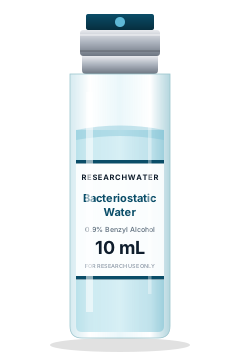
Same formulation as our 30 mL SKU in a 10 mL vial. For research projects whose timeline is shorter than the 28-day in-use clock — pilot runs, single-experiment work, training labs.
Reconstitute small quantities of lyophilized research peptides without committing to a 30 mL vial. The 10 mL footprint matches single-project consumption patterns.
Concentration-response in-vitro experiments where small volumes are sufficient and the 28-day in-use window covers the active research timeline.
Each trainee handles their own vial during instructional handling exercises.
Match vial size to project scope so leftover solvent is minimized and the 28-day in-use clock aligns with experimental timelines.
The formulation, purity profile, and 28-day in-use stability are identical. Only the fill volume differs. The 10 mL is suited to short-duration projects where the larger vial would expire before being fully used, since the 28-day in-use clock starts at first puncture regardless of vial size.
Per USP guidance, bacteriostatic water carries a 28-day in-use stability limit after the first puncture. Best practice is to mark the vial with the date and time of first draw and discard at day 28 regardless of remaining volume.
Most research peptides are stable in 0.9% benzyl alcohol, but some compounds (notably certain proteins and certain specialty peptides) are incompatible. If your compound is incompatible, use our preservative-free Sterile Water for Injection instead.
Visit our Lab Results portal and enter the lot number printed on the vial. You'll receive the full CofA — including assay results, manufacturing date, and retention sample location — as a downloadable PDF.